
Hybrid Maples
Since they are still being sold and planted out there, its time for another warning about these problematic maples. I learned the hard way that hybrid red maples are poor tree selections and don’t live long. Their thin bark commonly leads to sunscald but there are several other issues. See the list below.
Back in the 80’s I designed several variations of these cross-breeds into a commercial landscape project in Plano, Texas – Collin County Community College. There were all dead within 10 years. Some of them didn’t last 5.
The hybrid red maples commonly have sunscald and other issues. I learned the hard way years ago after putting several of them on commercial projects. Bigtooth maple is far superior and most other maples are as well. Others worth considering include trident maple and Shantung maple.
The red foliage of Autumn Blaze maple (Acer freemanii ‘Jeffersred’) makes it a popular deciduous shade tree. This hybrid, a cross of red maple (Acer rubrum) and silver maple (Acer saccharinum), was introduced in 1982. It grows best in hardiness zones 3 through 8 and can reach 60 feet high and 40 feet wide. It’s said to be pest resistant, but I really don’t agree with that. Some of the problems are listed below.
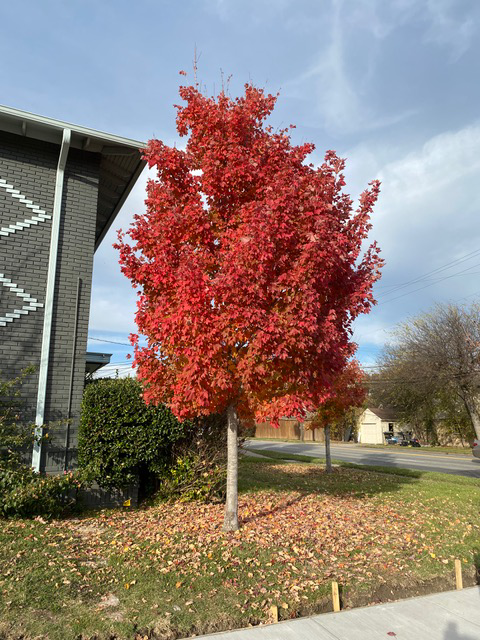
Fall color: why the hybrid maples are being sold so much.
Chlorosis
Autumn Blaze, October Glory and other hybrid maples often suffer from chlorosis, or iron (and other trace minerals) deficiency, the first sign will be yellow between the normally deep-green leaf veins. The leaves may become scorched and drop, and branches may die back. Chlorosis generally is not caused because the soil is iron-deficient but because the tree is not able to absorb enough iron through its roots.
Anthracnose
Anthracnose is a fungal disease that shows up as deformed leaves with discolored or dead blotches. It is confined to tan or brown spots on the leaves, and it can lead to leaf drop.
Verticillium Wilt
Another fungal disease that can affect the hybrid maples. The fungus blocks water movement in the tree by congesting its water-conducting tissue. Early symptoms include off-color, limp leaves that quickly turn dry and brittle and drop off. As the disease progresses, the soft sapwood beneath the bark turns dark green to black. Trees become infected when the fungus, which can live dormant for long periods in the soil, enters through roots wounded by insects or mechanical injuries. The fungus is most active in cool weather, which means symptoms most likely will first appear in late spring.
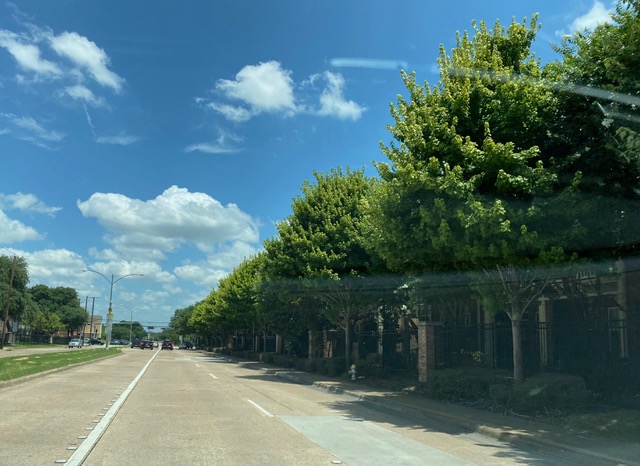
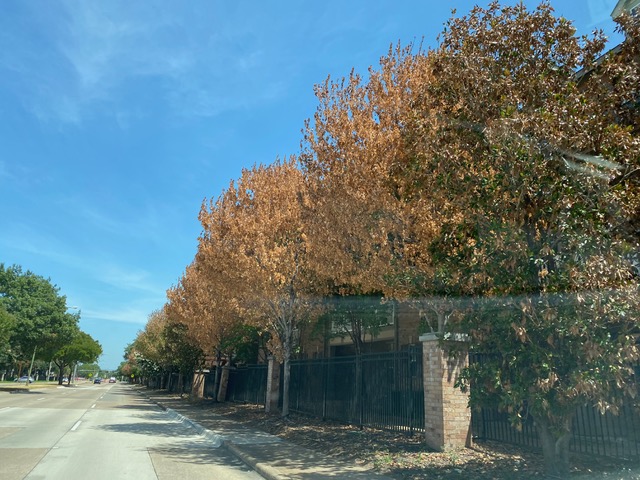
Healthy hybrid maples on Lover’s Lane, Dallas, 2020 (top) and Dying hybrid maples (below) in 2021.
Tar Spots
Rhytisma fungi cause a variety of tar spots on maple leaves that are nonlethal but unsightly. The spots start off in the spring on top of the leaves as small yellow areas. By late summer, the spots have become thick, shiny lesions up to 1/2 inch in diameter. Tar spots won’t harm the Autumn Blaze tree’s health, but heavy infections can cause early leaf drop. Controlling the disease is difficult; the best practice is to rake up leaves and compost. Spreading the disease is not a concern.
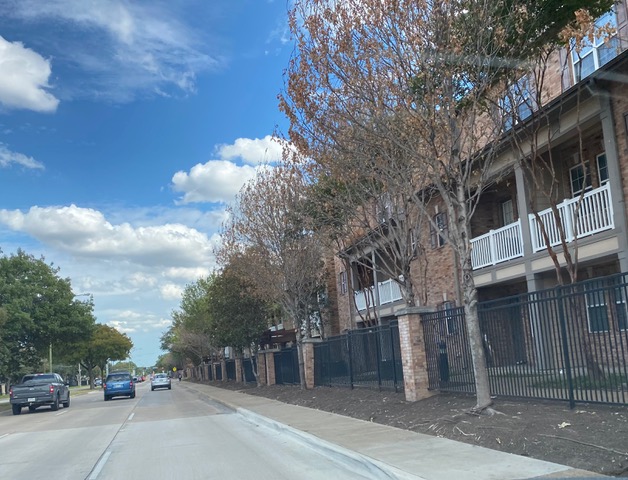
Hybrid maples continued demise in 2022
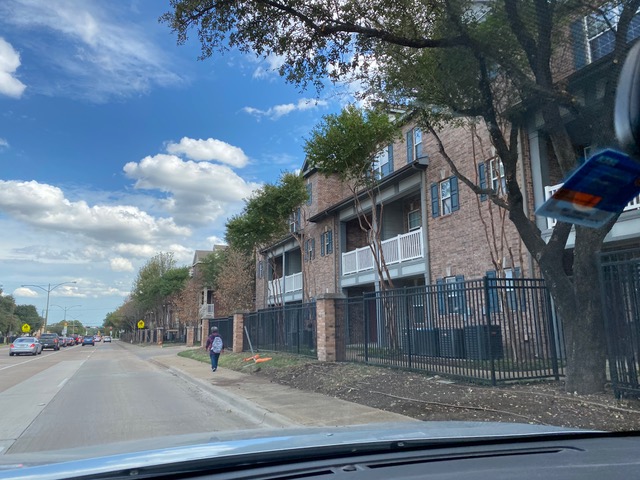
Cut down and gone in 2023.
After the hybrid maples were removed there was nothing left but some deformed crapemyrtles. Moral: don’t plant hybrid maples.
Sun Scald
The hybrid maples are highly susceptible to trunk damage from the sun. It’s due to the thin bark these trees have and the fact that they are basically weak trees. If you have these trees and trunks are damaged, apply a latex paint mixed 50-50 with water. The tree will grow the white wash away and the trunks will re-acclimate. Using white paint is ok but choosing a paint color that matches the bark would be better.
Freeze Damage
Along with all the other problems, the hybrid maples can be further weakened or killed by cold weather.
Visit the Japanese maple page here.